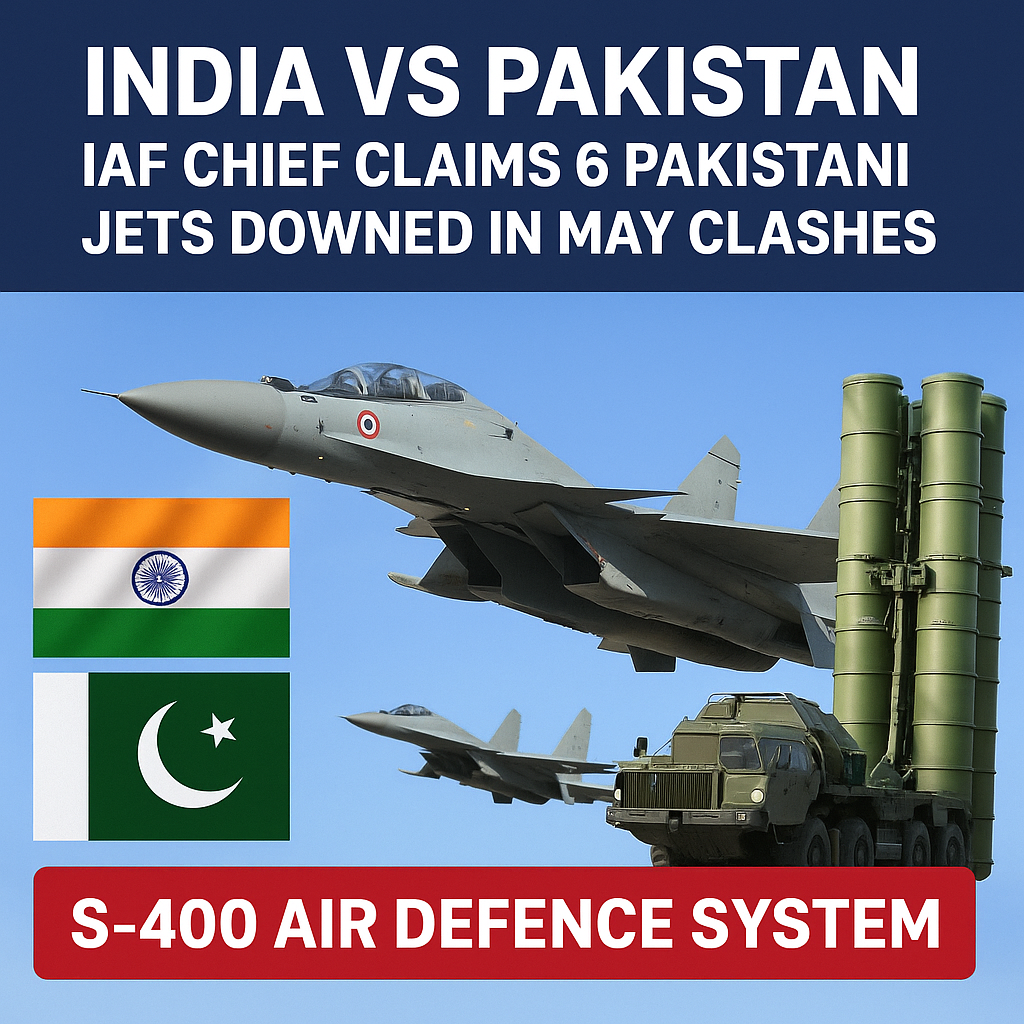

In a big statement that has caught the world’s attention, Indian Air Force (IAF) Chief Air Chief Marshal Amar Preet Singh revealed that during Operation Sindoor in May 2025, the IAF shot down six Pakistani military aircraft. This included five fighter jets and one large surveillance aircraft.
The IAF chief called it the largest-ever surface-to-air kill in recorded history. According to him, India’s powerful S-400 air defence system played the key role, taking down the large Pakistani aircraft from a distance of nearly 300 km.
What Happened in Operation Sindoor?
Operation Sindoor was part of the intense India–Pakistan military clashes that happened in May 2025.
India’s claim: 6 Pakistani aircraft destroyed.
Pakistan’s claim: No aircraft lost; instead, they shot down six Indian jets (including advanced Rafales).
Reality so far: Both countries are sticking to their versions, and no independent verification has been done yet.
Pakistan’s Response
Pakistan’s Defence Minister Khawaja Muhammad Asif called the IAF chief’s remarks “implausible” and “politically motivated.” He even challenged India to compare aircraft inventories to prove the claim.
India’s Acknowledgement of Own Losses
Interestingly, India’s Chief of Defence Staff (CDS) General Anil Chauhan had earlier admitted that the IAF suffered some losses during the May clashes — but he rejected Pakistan’s specific numbers as “absolutely incorrect.”
Why This Matters for the Region
India–Pakistan air battles are rare but serious events. Both countries have nuclear weapons, and any air conflict can raise tensions quickly.
This latest round of claims and counterclaims is not just about military power — it also shapes public opinion and international perception.
Quick Facts:
Clash Period: May 2025
Indian Claim: 6 Pakistani aircraft downed (5 fighters + 1 surveillance plane)
Pakistani Claim: No loss, but 6 Indian jets destroyed
Key Weapon Used by India: S-400 air defence system
Status: Claims remain unverified by independent sources
📌 Bazar Analyser Note:
Such events often affect stock markets, especially defence sector shares, oil prices, and investor sentiment in South Asia. Traders and analysts keep a close eye on such developments because tensions can impact economic stability.